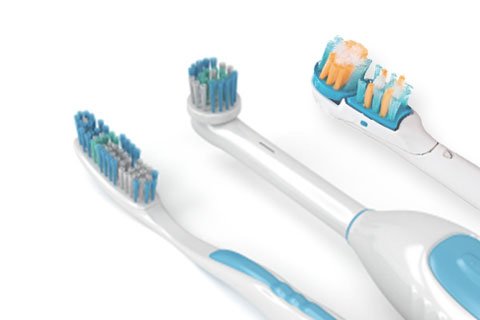
Electric vs Manual Toothbrush: Which One Should You Use?
Both electric and manual toothbrushes can effectively clean your teeth. The best choice depends on your individual needs, technique, and consistency. With proper brushing habits, either type can remove plaque and support healthy gums. However, certain situations make one option clearly more beneficial than the other.
When a Manual Toothbrush Is Enough
If you already brush twice daily with good technique and your dental check-ups show minimal plaque build-up, a manual toothbrush is doing its job. Manual brushes are affordable, widely available, and perfectly effective when used correctly.
Good manual brushing technique includes:
- Brushing for a full two minutes, twice a day
- Using a soft-bristled brush to protect enamel and gums
- Working systematically around the mouth: starting in one area and moving gradually, rather than brushing randomly
- Holding the brush at a 45-degree angle to the gum line
- Using gentle, circular motions rather than aggressive scrubbing
If you’re not experiencing issues with plaque control or gum sensitivity, there is little reason to switch to an electric toothbrush. Your licensed dental hygienist can confirm whether your current technique is working during your routine teeth cleaning in Calgary.
When an Electric Toothbrush May Be the Better Choice
Electric toothbrushes offer distinct advantages in several situations. Their powered bristle movement does much of the work for you, which can mean more consistent plaque removal, particularly for people who struggle with manual dexterity or brushing motivation.
Electric Toothbrushes Are Especially Beneficial If You:
- Have arthritis, limited hand mobility, or joint pain that makes gripping and manoeuvring a manual brush difficult
- Tend to brush too hard: many electric models include pressure sensors that alert you when you’re applying too much force, protecting your enamel and gum tissue
- Struggle with motivation or brushing time: built-in two-minute timers encourage a full brush cycle
- Have orthodontic appliances such as braces or aligners, where thorough cleaning around brackets and wires is more challenging
- Are managing gum disease or early gingivitis and need more thorough plaque removal at the gum line
Electric Toothbrushes for Children
For younger patients, electric toothbrushes designed specifically for children (with fun colours, characters, and music timers) can turn brushing into a habit kids actually look forward to. Making brushing enjoyable early on sets a strong foundation for lifelong oral health. Learn more about how we support young patients at Expressions Dental’s children’s dental care in Calgary.
Choosing the Right Electric Toothbrush
Not all electric toothbrushes are the same. Here’s what to consider when selecting a model:
- Brush head type: Rotating-oscillating heads and sonic/ultrasonic models are both effective. Your dentist can recommend which suits your mouth and needs.
- Comfort and grip: The handle should feel secure and easy to control, especially for those with limited hand strength.
- Pressure sensors: These help prevent over-brushing, which can cause gum recession and enamel wear over time.
- Built-in timer: A two-minute timer with 30-second interval alerts helps ensure each quadrant of your mouth receives adequate attention.
- Rechargeable battery: More economical and environmentally friendly than disposable battery models over time.
- Replacement heads: Follow the manufacturer’s guidelines. Most heads should be replaced every three months, or sooner if bristles appear frayed.
What Matters Most: Consistency and Technique
Whether you choose electric or manual, the single most important factor is brushing twice daily and flossing once daily without fail. No toothbrush, regardless of technology, can compensate for infrequent or rushed brushing.
Work around your teeth in a consistent, systematic pattern: begin in one corner of your mouth and move methodically to ensure no surface is missed. Pay particular attention to the gum line, the inner surfaces of teeth, and the back molars, which are commonly overlooked.
Regular professional cleanings are equally essential. Even the best at-home brushing cannot remove hardened tartar (calculus), which requires professional scaling by a licensed dental hygienist in Calgary. At Expressions Dental, we also offer Guided Biofilm Therapy, an advanced, comfortable approach to professional cleaning that targets biofilm and plaque build-up with precision.
Ask Your Calgary Dentist What’s Right for You
The right toothbrush is ultimately the one you will use correctly and consistently. If you’re unsure which type suits your needs, or if your current brushing habits are actually working, the team at Expressions Dental in Calgary NW is here to help. Our licensed dental team can assess your oral health, review your home care routine, and give you personalised recommendations during your next visit.
Ready to take better care of your smile? Book an appointment at Expressions Dental: we welcome new patients and families across Calgary NW.
Frequently Asked Questions
Is an electric toothbrush actually better than a manual one?
Research suggests electric toothbrushes, particularly rotating-oscillating models, can remove slightly more plaque than manual brushes in some cases. However, a manual toothbrush used with proper technique twice daily is still highly effective. The best toothbrush is the one you use consistently and correctly.
Who benefits most from using an electric toothbrush?
Electric toothbrushes are especially helpful for people with arthritis, limited hand mobility, or conditions that make precise brushing movements difficult. They also benefit those who tend to brush too hard, children who need motivation to brush, and patients managing gum disease or wearing orthodontic appliances.
How long should I brush my teeth for?
You should brush for a minimum of two minutes, twice a day, once in the morning and once before bed. Many electric toothbrushes include a built-in two-minute timer with 30-second interval alerts to help you cover all four quadrants of your mouth evenly.
Can brushing too hard damage my teeth?
Yes. Brushing with excessive force can wear down tooth enamel and cause gum recession over time. Always use a soft-bristled toothbrush and gentle, circular motions. Electric toothbrushes with built-in pressure sensors can alert you when you're applying too much pressure, helping protect your gums and enamel.
How often should I replace my toothbrush or brush head?
You should replace your manual toothbrush or electric brush head every three months, or sooner if the bristles appear frayed or splayed. Worn bristles are less effective at removing plaque and can be more abrasive on gums.
Do I still need professional teeth cleanings if I brush well at home?
Absolutely. Even excellent daily brushing and flossing cannot remove hardened tartar (calculus), which can only be cleared by a licensed dental hygienist. Regular professional cleanings at a Calgary dental clinic like Expressions Dental are essential for preventing cavities, gum disease, and other oral health issues.
What toothbrush should I get for my child?
For younger children, a soft-bristled manual or electric toothbrush sized for small mouths is recommended. Electric toothbrushes designed for children often feature fun colours and music timers that encourage kids to brush for the full two minutes. Ask your Calgary NW dentist at Expressions Dental for a recommendation based on your child's age and needs.
